
Sri Lanka’s healthcare system has long been celebrated as a shining model of accessible public medicine in South Asia. However, the sector today faces an unprecedented crisis that impacts patients, doctors, and healthcare administrators alike, a severe and expanding healthcare workforce shortage.
With thousands of medical professionals migrating abroad and overburdened local staff straining under heavy patient loads, Sri Lanka’s medical ecosystem is reaching a critical tipping point.
While financial restructuring and policy changes are essential long-term fixes, there is an immediate, highly practical driver that can help cushion this crisis, Digital Transformation.
Here is a closer look at the ground realities of Sri Lanka’s healthcare workforce challenges and how digital health technology such as comprehensive platforms like eMed Care can bridge the gap to make care delivery efficient, sustainable, and scalable.
The Practical Reality: What is Happening in Sri Lanka’s Healthcare Sector?
To solve a problem, we must understand its practical, day-to-day realities. The strain on Sri Lanka's healthcare system is caused by a mix of key operational challenges:
1. The Severe Brain Drain
Following recent economic challenges, over 1,800 to 2,500 doctors, specialists, and nursing personnel have emigrated for foreign employment. Specialist fields like emergency medicine, anesthesiology, pediatrics, and psychiatry have been particularly hard hit. As a result, remaining specialists are forced to cover multiple wards or travel between multiple hospitals, leading to severe burnout.
2. Overwhelmed Peripheral & Private Facilities
Because specialists are concentrated in major urban hubs like Colombo, Kandy, and Karapitiya, rural and semi-urban patients often travel hundreds of kilometers just for a simple consultation or follow-up. On the private side, clinics and hospitals face daily operational bottlenecks managing massive queues with limited staff.
3. Administrative Burden & Paper-Based Workflows
A significant portion of a Sri Lankan doctor’s or nurse’s shift is spent on non-clinical administrative tasks manually writing prescriptions, searching through paper file records, handwriting lab requests, and organizing scheduling sheets. In a talent-scarce environment, having highly trained doctors spend hours on paperwork is a massive misuse of valuable human resources.
4. Poor Care Continuity and Fragmented Records
When patients move between public hospitals, private clinics, laboratories, and pharmacies, their medical history rarely travels with them. Doctors are often forced to re-take patient histories or re-run diagnostic tests from scratch simply because previous records are locked away on paper sheets at a different facility.
Why Digital Transformation Matters Now More Than Ever
Digital health transformation is not about replacing human doctors or nurses with technology. Instead, it is about optimizing the limited human resources we have so that our remaining workforce can treat more patients effectively without burning out.
By digitizing clinical operations, healthcare providers in Sri Lanka can unlock four major practical benefits:
1. Maximizing Physician Efficiency (Doing More with Fewer Doctors)
Electronic Health Records (EHR) and digitized clinical workflows drastically reduce administrative overhead. When doctors can view a patient's complete history, previous lab results, and medication list in a few clicks, the average consultation time becomes significantly more productive. Digitized prescription tools cut prescription times from minutes down to seconds.
2. Expanding Reach via Telemedicine & Remote Consultations
Telehealth removes geographic barriers. A specialist based in Colombo can conduct follow-ups with a patient in Jaffna or Hambantota via secure virtual consultations. This eliminates unnecessary hospital visits for routine checkups, eases crowded waiting rooms, and ensures rural communities still have access to scarce specialist care.
3. Streamlining the Patient Flow & Reducing Waiting Times
Digital queue management, automated appointment scheduling, and online lab report delivery simplify the patient journey. Patients no longer need to stand in line for hours just to book an appointment or collect a printed test result, freeing up front-desk and administrative staff to focus on critical care.
4. Data-Driven Resource Management
Smart analytics help clinic managers and hospital administrators forecast patient volumes, optimize staff shift scheduling, and manage pharmacy inventory effectively. Instead of reacting to stockouts or overcrowding, digital systems allow management to plan ahead based on real-time data.
How Digital Platforms Support Sri Lanka’s Healthcare Ecosystem
Platforms like eMed Care are designed with this exact ecosystem in mind. Rather than forcing healthcare facilities into rigid, overly complex international software setups, modern digital care solutions focus on practical local needs:
Unified Digital Records & Patient Management:
Securely centralizes complete patient histories so general practitioners, specialists, labs, and pharmacies stay on the same page. Through comprehensive Patient File & Record Management, doctors can review past diagnoses, treatments, and reports instantly. Digital tools streamline day-to-day operations with features like Locum Doctor Handling to ensure smooth record transfers when temporary physicians cover shifts, and Assistant Management to grant staff secure, role-based access for administrative updates without compromising sensitive medical data.
Integrated Practice & Operations Management:
Eliminates manual paperwork and optimizes patient flow for individual clinics, hospital networks, and multi-facility practices alike. eMed Care automates daily practice administration through:
Smart Appointment Management with Calendar View
Gives doctors and staff a clear visual schedule of consultations, procedures, and doctor shifts.
QR Code Appointment Booking & Online Scheduling
Enables patients to instantly scan, book, and confirm appointments on their phones, drastically cutting down front-desk call volumes.
Patient Queue & Session Management with TV Queue Display Support
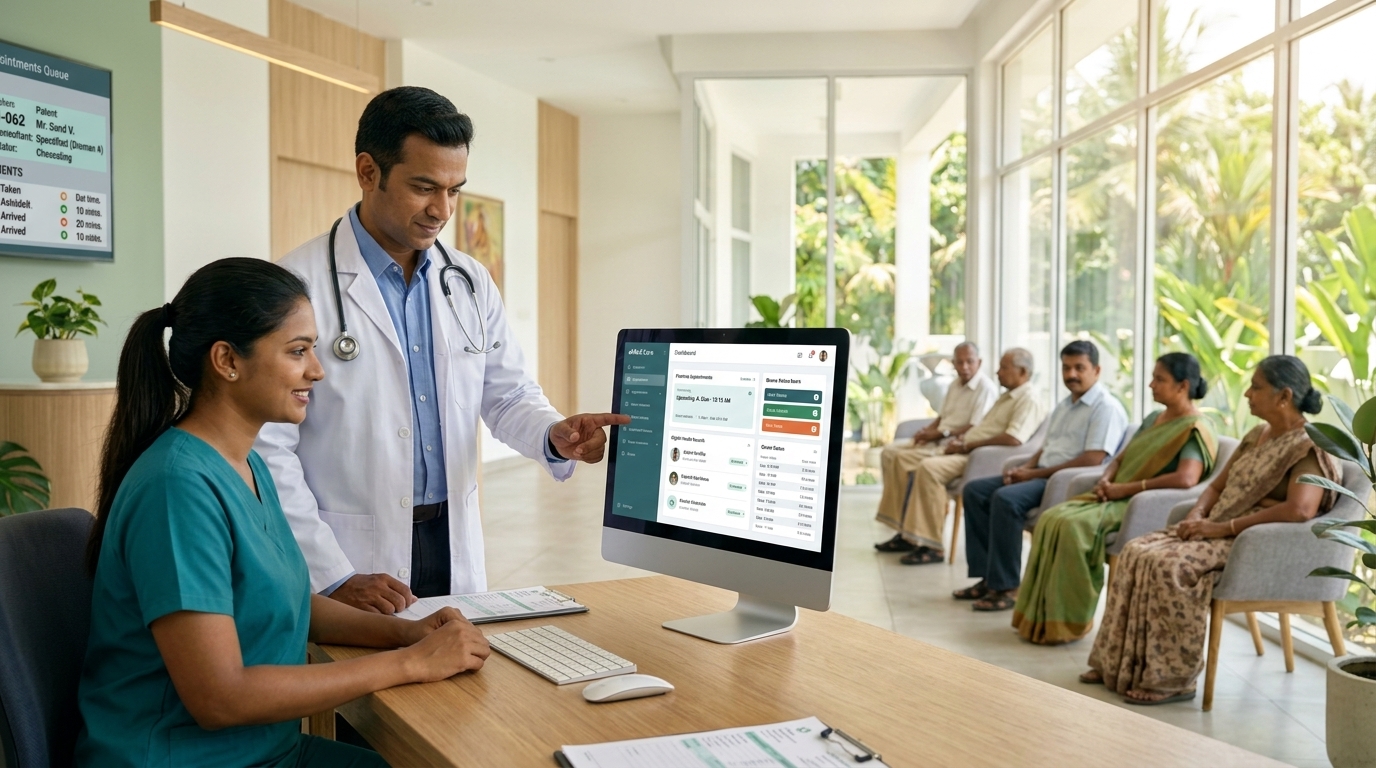
Keeps waiting rooms calm and organized by tracking patient arrivals and broadcasting live queue status updates on waiting room screens.
Multi-Clinic Location Management
Allows doctors and administrators managing multiple practices to seamlessly monitor operations, schedules, and patient records across all branches from a single dashboard.
Stock & Inventory Management
Tracks pharmacy items, medical supplies, and stock levels in real time to prevent critical stockouts and simplify reordering.
The Road Ahead: Building a Resilient Healthcare Future
The healthcare workforce challenge in Sri Lanka cannot be solved overnight. Bringing back lost talent and training new specialists will take time. However, healthcare institutions do not have to wait to take action.
By embracing digital health technology today, Sri Lanka can build a more resilient, efficient, and doctor-friendly healthcare system. Digital transformation protects our remaining medical workforce from burnout, improves patient outcomes, and ensures that quality care remains accessible to all Sri Lankans no matter the circumstances.
Ready to Modernize Your Clinic?
Experience how eMed Care can streamline your appointments, empower your staff, and give your patients a modern healthcare experience.
It takes less than 15 minutes. Personalized for your clinic’s workflow.


